Installing PageMotor on HostGator
A plain-English walkthrough. About ten minutes, and you do not need to be technical.
Not on HostGator? Everything in this guide is standard cPanel, so the steps are the same on any cPanel host. The screens may be laid out a little differently, but the names you need, like File Manager and MySQL Databases, are the same. We also have this guide for Bluehost and GoDaddy, and a different one for SiteGround (which does not use cPanel).
Use this guide with any AI assistant
Download it as a prompt file, paste it into Claude, ChatGPT, Gemini or any LLM, and it will walk you through every step interactively.
▶ The whole install in 3 minutes 26 seconds, narrated, with captions — the HostGator route throughout, including the plan check to do first and the PHP 7.4 default on older accounts.
Read the narration instead
The shape of it. Standard cPanel, about ten minutes, and you do not need to be technical. One thing to check before you start, though.
The plan. HostGator's standard hosting plans all include cPanel, which is what PageMotor needs. Their separate Website Builder product does not, and PageMotor cannot run there at all. If your dashboard has no cPanel button, that is the reason.
Opening cPanel. Log in at portal.hostgator.com, choose Hosting in the menu, and click the cPanel button under Quick Links. There is also a shortcut that always works: go to yourdomain.com/cpanel and log in with the cPanel details from your HostGator welcome email.
Upload and extract. In cPanel, open File Manager and go to the folder for your site, usually public_html. Click Upload, choose the PageMotor zip, and let it finish — File Manager takes files up to 500 MB, far larger than anything PageMotor ships. Then right-click the zip and choose Extract. You should end up with pagemotor.php, a lib folder, and config-sample.php.
The database is three quick stages on one page. Open MySQL Databases. Under Create New Database, type a name like pagemotor and create it. Scroll down to MySQL Users, add a new user, let the generator make the password, and write it down. Then scroll to Add User To Database, choose your user and your database, click Add, tick ALL PRIVILEGES, and Make Changes.
The one nearly everyone misses. cPanel puts your account name on the front of both. A database you typed as pagemotor is saved as something like theaccount_pagemotor, and the user the same way. Copy the full names exactly as cPanel shows them. Getting this wrong is the most common reason the install fails at the last step.
The rename. config-sample.php becomes exactly config.php, which is what switches PageMotor on. Put the three values in, using the full prefixed names, and leave everything else alone. DB_HOST stays localhost.
Finish. Go straight to /admin/. On that first visit PageMotor sets itself up and walks you into creating your admin user. Open the admin before you open the front of the site.
If it goes wrong. A 500 or a blank page is almost always config.php: wrong name, wrong folder, or never renamed. HostGator gives you three ways to read the real reason: cPanel › Metrics › Errors; the error_log file in your site folder; or, without opening cPanel at all, the Customer Portal under Websites › Settings › Advanced › Logs.
One HostGator note, worth acting on once you are in: older accounts can still default to PHP 7.4. PageMotor wants a modern PHP 8. Check cPanel › Software › MultiPHP Manager and pick a PHP 8 version if you are not on one.
pm-preflight.php,
upload it into the same folder you are about to install into, then open
yourdomain.com/pm-preflight.php in your browser. It tells you in plain English
whether this host can run PageMotor: the PHP version, any missing extensions, whether PHP can
write config.php for you, and whether the files landed in the right folder. It is
read-only, it never asks for a password, and it is deliberately written to run even on very old
PHP, so it reports an out-of-date PHP version instead of failing silently on it. Delete the file
once you have read the report.
1Put PageMotor on your site
- Open cPanel: log in at portal.hostgator.com, choose Hosting in the menu, and click the cPanel button under Quick Links. (A shortcut that always works: go to
yourdomain.com/cpaneland log in with the cPanel details from your HostGator welcome email.) - In cPanel, click File Manager and open the folder for your site. It is usually
public_html. (Installing on a second, addon domain? Use that domain's own folder instead; cPanel shows it under Domains.) - Click Upload, choose your PageMotor
.zip, and wait for it to finish. (File Manager takes files up to 500 MB, far larger than the PageMotor zip.) - Back in File Manager, right-click the uploaded zip and choose Extract.
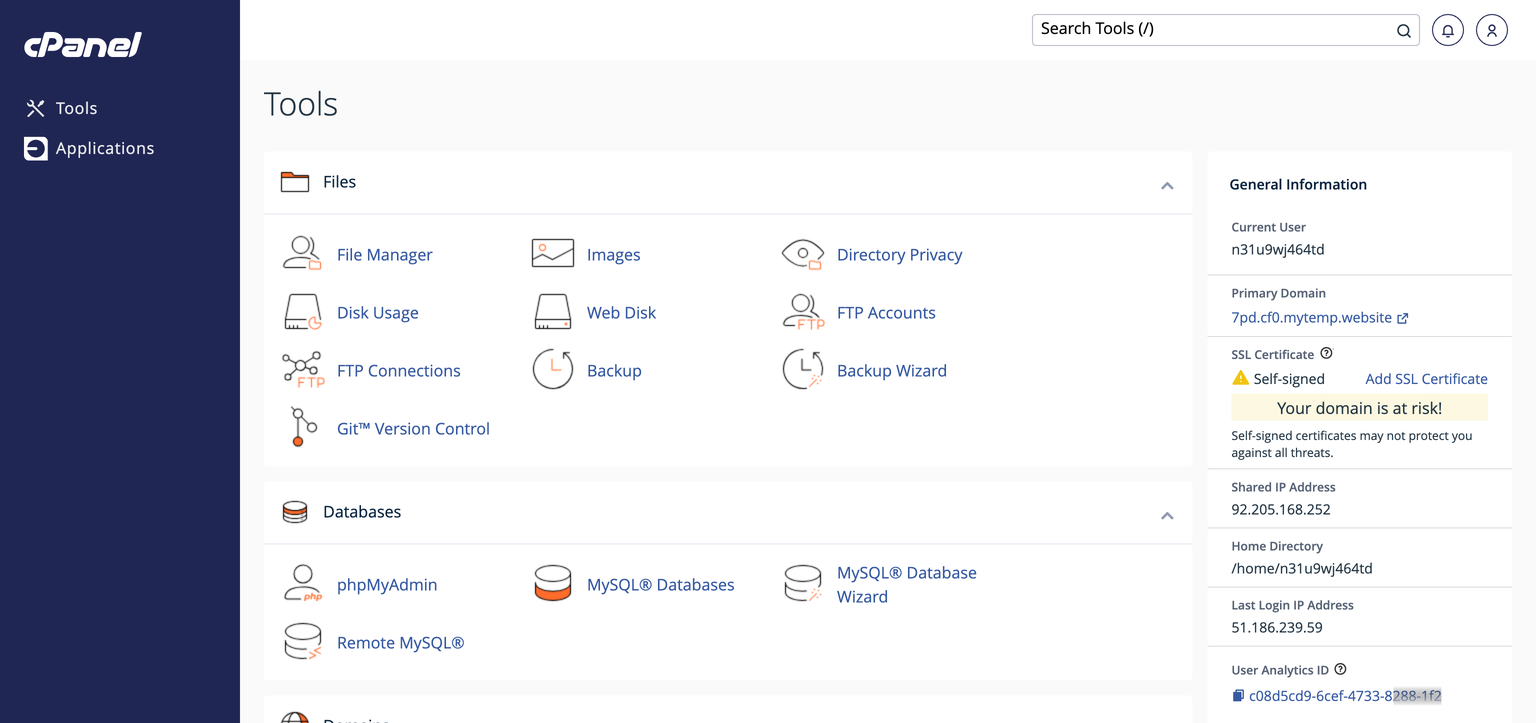
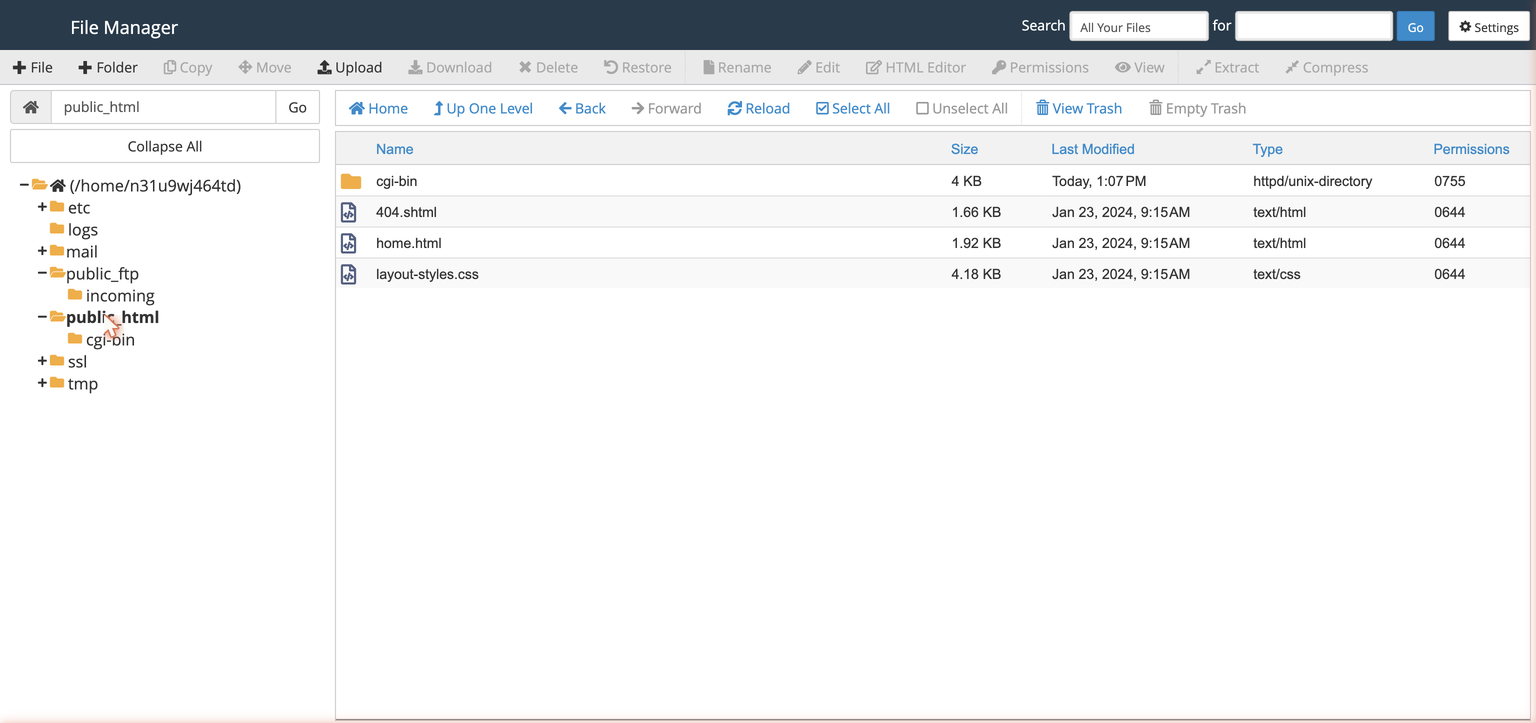
pagemotor.php, a lib folder, and a file called config-sample.php sitting in your site folder. (If extracting gave you a single folder called pagemotor instead, open it, select everything inside, choose Move and move it all into your site folder, then delete the empty folder and the zip.) Good. We use that sample file in step 3.2Create your database
PageMotor keeps your content in a database. Make one in three quick stages.
- In cPanel, open MySQL Databases (under the Databases section).
- Under Create New Database, type a name like
pagemotorand click Create Database. - Scroll to MySQL Users → Add New User. Pick a username, let the password generator make a strong password, and click Create User. Write the password down now.
- Scroll to Add User To Database. Choose your new user and your new database, click Add, then tick ALL PRIVILEGES and Make Changes.
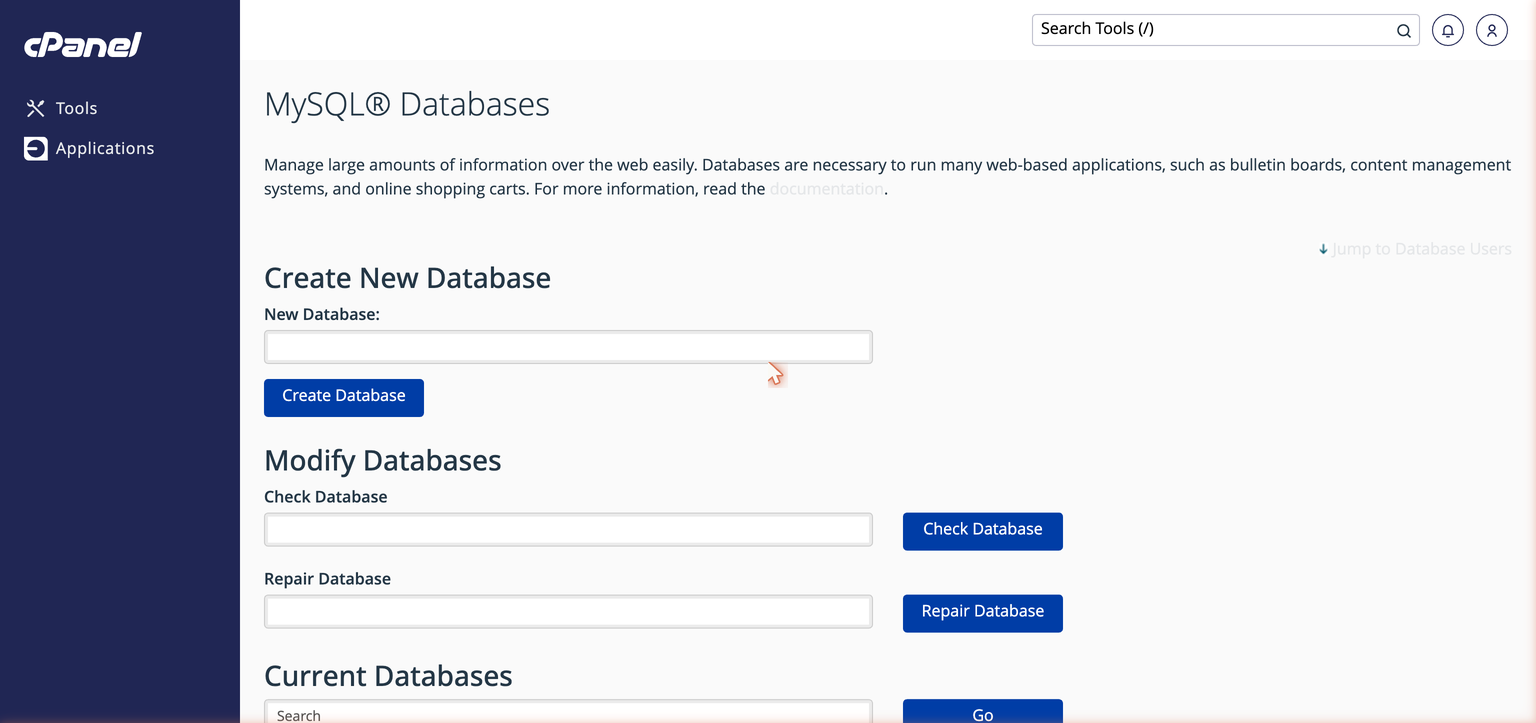
theaccount_ prefix in front of the name field.)pagemotor is saved as something like theaccount_pagemotor, and the user the same way. Copy the full names exactly as cPanel shows them. You will need three things in the next step: the database name, the username, and the password.3Fill in config.php
This is the file that connects PageMotor to the database you just made.
yoursite.com/admin/ in your browser and it asks for the three database values and writes config.php itself. If the wizard appears, use it and jump to step 4. If you get a blank white page instead, that is not an error and nothing is broken: your download simply predates the wizard, so there is nothing at that address to answer you. Carry on with the hand-edit below, which still works on every release.- In File Manager, find
config-sample.phpnext topagemotor.php. - Right-click it and choose Rename. Rename it to exactly
config.php. This rename is the step that switches PageMotor on. - Right-click
config.phpand choose Edit. - Put your three values into
DB_NAME,DB_USERandDB_PASSWORD, using the full prefixed names from step 2. Leave the rest as they are, then Save.
Here is what the database section of your config.php should look like once filled in. Edit the existing lines to match; you are changing three values, not pasting this block in:
// Database connection info:
define('DB_NAME', 'theaccount_pagemotor');   // exact name from cPanel
define('DB_USER', 'theaccount_pmuser');      // exact username from cPanel
define('DB_PASSWORD', 'your-strong-password');
define('DB_HOST', 'localhost');            // correct for HostGator and most cPanel hosts
define('DB_CHARSET', '');
define('DB_COLLATE', '');
define('DB_TABLE_PREFIX', 'pm_');
define('DB_FLAGS', '');
define('PM_HTML_CHARSET', '');config.php (not config-sample.php, and not config.php.txt), and it must sit in the same folder as pagemotor.php.4Finish in your browser
- Go straight to
yoursite.com/admin/first. On this first visit PageMotor sets up its content and walks you into creating your admin user. Make the admin the first page you open on a brand-new install; current releases expect it, and it never hurts on older ones. - Then visit your website to see the front of the site.
Connecting Claude from this host
PageMotor speaks MCP natively, so once your site is up you can connect Claude Code or Claude.ai to it and let Claude build pages, manage content and run plugins for you. The connection asks a little more of a host than serving pages does. Four things must be true: the Authorization header must reach PHP intact, PageMotor must be allowed to answer its dynamic /.well-known/ routes itself, PHP's clock must be on UTC, and nothing may redirect Claude's POST to /mcp (the trailing-slash trap).
In practice, connecting takes about a minute. In a browser at claude.ai:
- Go to Customize → Connectors (straight there: claude.ai/customize/connectors).
- Click +, then Add custom connector.
- Give it any name you like. For the URL, use your site’s connector address:
https://your-site.com/mcp/, all lower case, trailing slash included. - Click Add. Claude sends you to a sign-in page on your own site. Log in with your PageMotor admin account and approve it.
- Start a new chat, click the + at the lower left of the message box, hover Connectors, and switch yours on.
Then simply talk to it: “what pages do I have”, or “create a contact page”. A free Claude account is enough and allows one custom connector; Pro, Max, Team and Enterprise allow more.
You do not need to test any of those requirements by hand. Install EP Host Check and read its MCP / Claude connection rows: since v1.2.0 its five checks cover all of this from your admin panel, no working Claude connection required, each with a plain fix. If a row fails, or the connection misbehaves anyway, the MCP troubleshooting guide has the exact diagnostic and fix for every verified cause.
Authorization header before PHP ever sees it. The fix is one line in your .htaccess, ready to paste in section 6 of the troubleshooting guide.If something is not working
Open these only if you hit them. Each one is quick.
I see "HTTP ERROR 500" or a blank white page
most commonAlmost always a config.php problem. Check three things:
- The file is named exactly
config.php(not stillconfig-sample.php, and notconfig.php.txt). - It is in the same folder as
pagemotor.php. - To see the real reason, open cPanel → Metrics → Errors, or the
error_logfile in your site folder. (HostGator's Customer Portal also shows errors without opening cPanel: Websites → Settings → Advanced → Logs.) If it saysconfig.php"No such file or directory", this is your fix.
The log says "MySQLi Connection Error"
Good news, that means config.php is now working and PageMotor reached the database step. It just could not log in. Re-check, against the exact names cPanel shows:
- The database name and username include your account prefix (the
theaccount_part). - The password is correct.
- The user was added to the database with ALL PRIVILEGES (step 2, last part).
- Rarely, a host keeps databases on a separate server, so
DB_HOSTis notlocalhost. If the three values above are definitely right, check your host's database details page or welcome email, or ask their support, for the correct host name.
I changed my PHP version and nothing changed
The PHP version is rarely the cause. A missing or misnamed config.php fails the same way on every version, so changing it makes no difference. Sort the config.php first. PageMotor is happy on modern PHP 8.x. One HostGator note: older accounts can still default to PHP 7.4, so once the install works, check cPanel → Software → MultiPHP Manager and pick a PHP 8 version if you are not on one.
I cannot find config-sample.php
It ships inside the PageMotor download, right next to pagemotor.php. Two things to check: the files may have landed in a pagemotor subfolder when the zip extracted, in which case move everything in it up into your site folder (see the note in step 1); and if the folder is genuinely empty, the zip did not extract completely, so repeat step 1.